
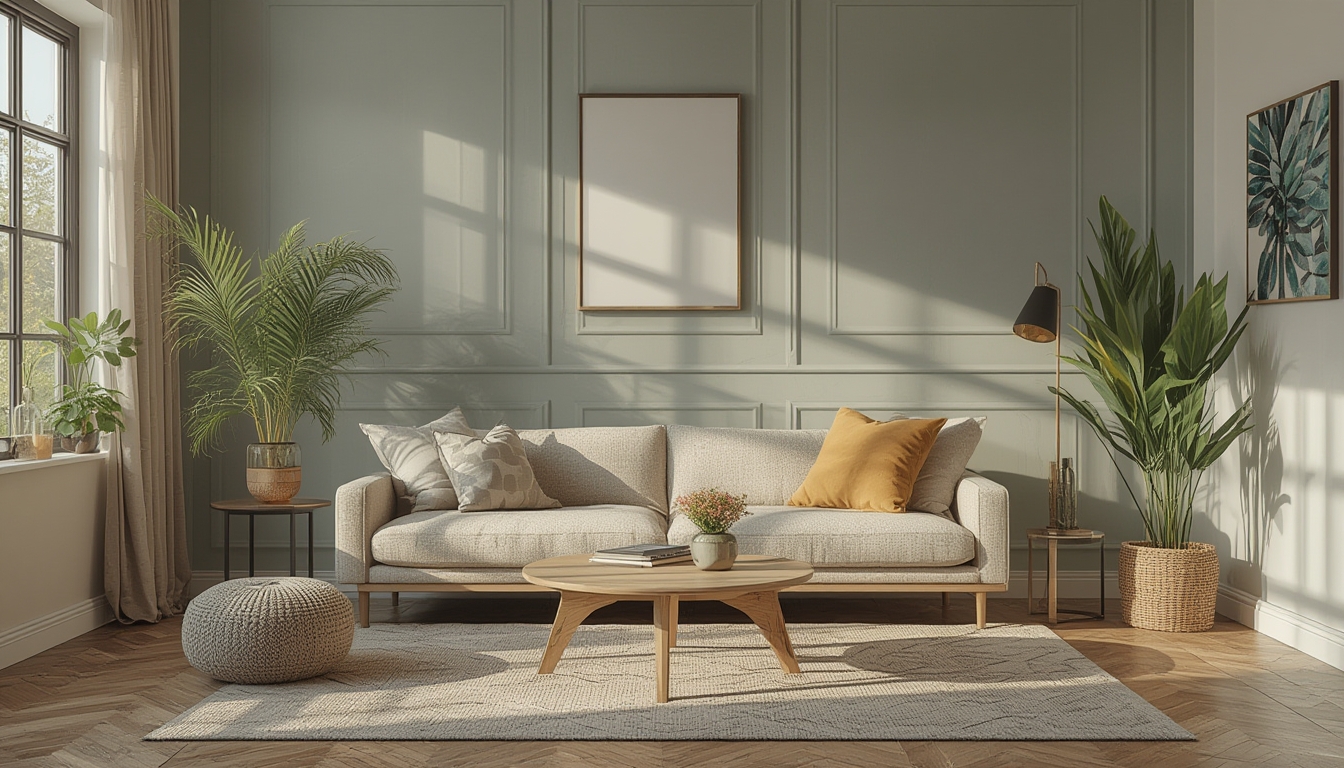
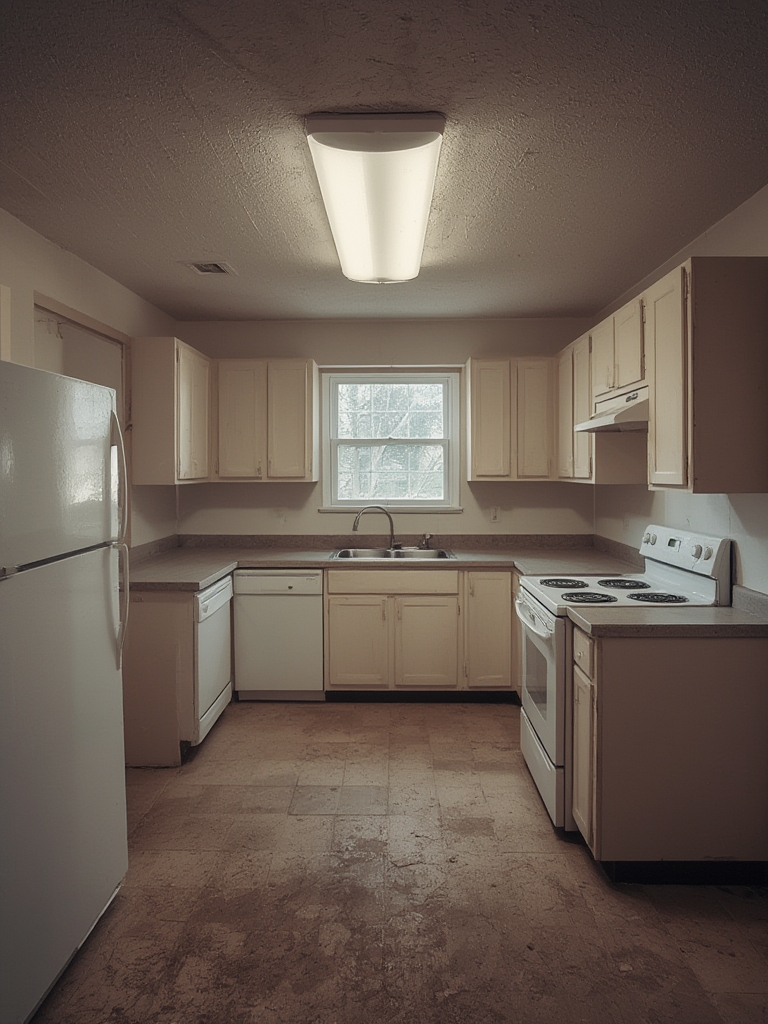
When we look at a room, we’re not just seeing furniture and color—our brains are interpreting every visual cue, shaping mood, stress levels, and overall well‑being. Research from the University of Texas shows that exposure to natural elements can lower cortisol by up to 15%, while cluttered spaces increase heart‑rate variability, a marker of stress. By deliberately applying decor psychology, you can turn any space into a wellness sanctuary. Below is a data‑driven, step‑by‑step guide to assembling, restoring, and styling a calming living‑room corner that maximizes mental health benefits.
Step 1: Choose a Wellness‑Focused Color Palette
Color influences the limbic system, the brain area governing emotions. A 2022 study found that soft blues and muted greens improve focus by 12% and reduce anxiety by 9% compared to bright reds. Follow these actions:
- Tool needed: Color swatch sampler or digital palette app.
- Action: Select three base colors—one primary (e.g., sage green), one accent (dusty teal), and one neutral (warm ivory).
- Tip: Test each shade on a 12‑inch wall strip; observe how natural light shifts the hue throughout the day.
Step 2: Gather Natural Materials
Materials that mimic nature trigger biophilic responses. According to a Journal of Environmental Psychology meta‑analysis, wood, stone, and woven fibers increase perceived comfort by 18%.
2.1. Select Sustainable Wood Furniture
- Tools: Tape measure, level, screwdriver set.
- Action: Measure the intended corner (width, depth, height). Choose a reclaimed pine sideboard that fits within 10% of those dimensions.
- Tip: Verify the wood’s moisture content (< 12%) to prevent future warping.
2.2. Add Stone or Ceramic Accents
- Tools: Soft cloth, stone sealant, silicone adhesive.
- Action: Place a 12‑inch river stone tray on the sideboard; seal it with a clear, low‑VOC sealant.
- Tip: Use a silicone bead around the tray’s edge to prevent water damage.
Step 3: Incorporate Biophilic Elements
Plants are the single most effective decor item for boosting well‑being. A NASA Clean Air Study found that a 2‑foot spider plant can remove up to 90% of indoor formaldehyde.
3.1. Choose Low‑Maintenance Plants
- Tools: Potting soil, self‑watering pots, small trowel.
- Action: Plant a ZZ plant (Zamioculcas zamiifolia) in a matte white pot; place it on the sideboard’s left corner.
- Tip: Position the pot near indirect sunlight to avoid leaf burn.
3.2. Add a Living Wall Panel
- Tools: Wall‑mount brackets, drill, level.
- Action: Install a 3‑ft × 2‑ft modular moss panel on the adjacent wall, securing brackets at 1‑inch intervals.
- Tip: Mist the moss twice weekly; use a hygrometer to keep humidity between 45‑55%.
Step 4: Optimize Lighting for Mood Regulation
Light exposure regulates melatonin production. A Harvard Health review indicates that warm, dimmable lighting improves sleep quality by 20%.
4.1. Install Adjustable LED Fixtures
- Tools: Wire stripper, voltage tester, screwdriver.
- Action: Replace existing overhead bulbs with 2700 K dimmable LEDs; connect to a smart dimmer.
- Tip: Set a “sunset” schedule (3000 K at 7 PM, 2200 K at 9 PM) to cue the body’s natural circadian rhythm.
4.2. Add Task Lighting
- Tools: Clamp lamp, LED strip lights.
- Action: Mount a clamp lamp on the sideboard’s right side for reading; run a 12‑inch LED strip under the shelf for ambient glow.
- Tip: Use a 3000 K color temperature for the strip to maintain a cohesive warm tone.
Step 5: Declutter and Organize Mindfully
Clutter overload activates the brain’s threat‑detection circuitry. A UCLA study found that a tidy environment improves focus by 15%.
5.1. Implement the “One‑In, One‑Out” Rule
- Tools: Storage baskets, label maker.
- Action: Place three woven baskets on the sideboard for books, remote controls, and decorative objects.
- Tip: Label each basket; limit each to a maximum of 10 items to maintain visual calm.
5.2. Use Transparent Containers for Small Items
- Tools: Clear acrylic boxes, rubber bands.
- Action: Store chargers, earbuds, and spare keys in a 6‑inch clear box; secure the lid with a silicone band.
- Tip: Keep the box on the lower shelf to keep the eye line clear.
Step 6: Add Sensory Layers for Holistic Wellness
Multi‑sensory design deepens the restorative effect. A 2021 Stanford experiment showed that scent‑enhanced environments reduced perceived stress by 13%.
6.1. Introduce Calming Aromas
- Tools: Essential‑oil diffuser, lavender oil.
- Action: Fill the diffuser with 5 ml lavender oil and set it to a 30‑minute cycle during evening hours.
- Tip: Keep the diffuser on a stable surface to avoid spills.
6.2. Incorporate Soft Textures
- Tools: Throw blanket, plush cushions.
- Action: Drape a 60 × 80 cm cashmere‑blend blanket over the sideboard’s back edge; add two teal‑green cushions to the nearby armchair.
- Tip: Choose fabrics with a thread count above 300 for a luxurious, tactile feel.
Step 7: Evaluate and Adjust Based on Feedback
Wellness design is iterative. After a week of living in the space, record subjective data (e.g., sleep quality, stress levels) and objective metrics (e.g., indoor air quality via a portable sensor). If cortisol levels remain high, consider adding more greenery or reducing bright accent lighting.
7.1. Conduct a Mini Survey
- Tools: Smartphone, Google Forms.
- Action: Create a five‑question survey asking about comfort, focus, and relaxation; send it to household members.
- Tip: Use a Likert scale (1‑5) for easy quantification.
7.2. Fine‑Tune Elements
- Tools: Adjustable brackets, extra lighting filters.
- Action: If the survey indicates “too bright,” add a warm filter to the LED strip; if “not enough privacy,” introduce a sheer curtain.
- Tip: Make changes incrementally—one variable at a time—to clearly see impact.
By following these data‑backed steps, you’ll transform a simple corner into a psychologically supportive oasis. The combination of soothing colors, natural materials, biophilic touches, mindful lighting, and organized storage creates a holistic environment that not only looks beautiful but actively promotes mental wellness. Enjoy the process, observe the subtle shifts in mood, and let your space evolve alongside your well‑being.