
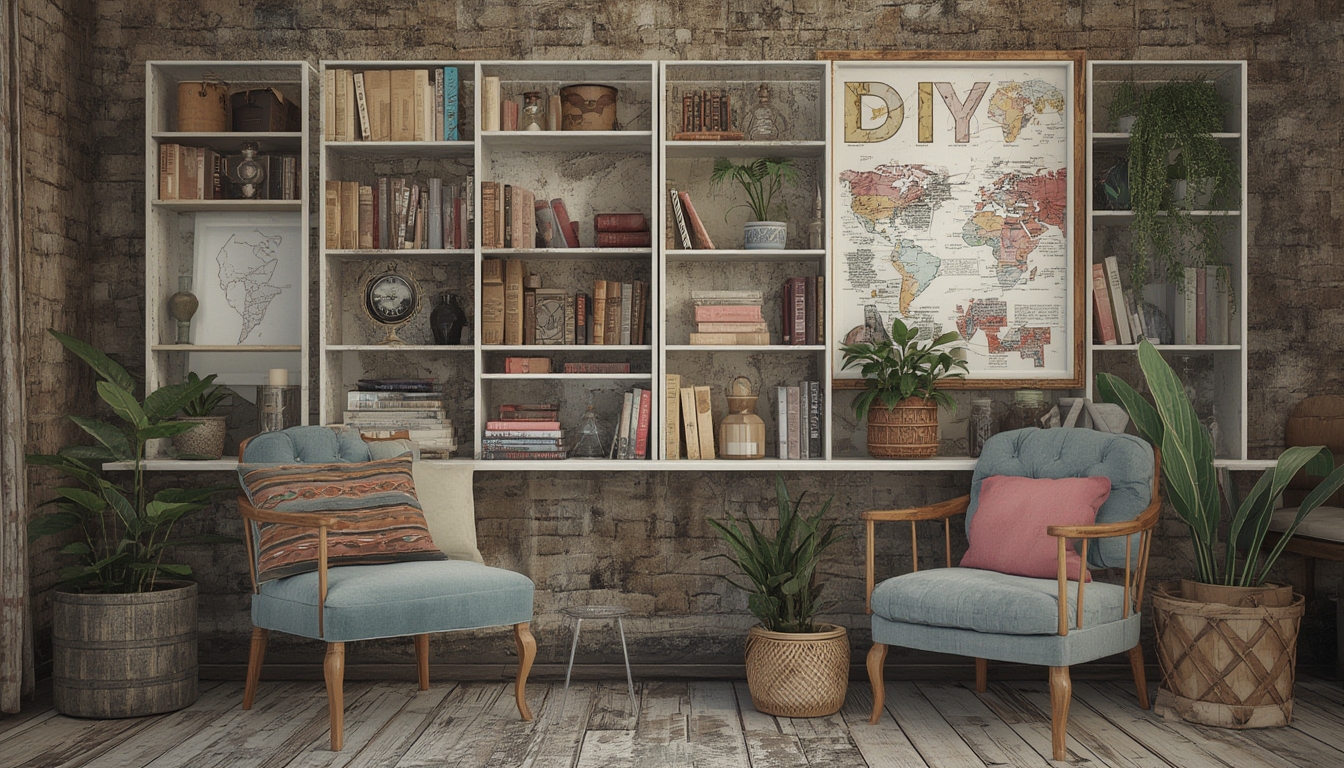

Welcome to the world of DIY & upcycle projects, where creativity meets sustainability. Transforming everyday items into functional, stylish pieces not only saves money but also reduces waste. In this guide, you’ll find step‑by‑step instructions for three popular upcycling ideas: a reclaimed wood coffee table, a painted mason‑jar pendant light, and a repurposed ladder bookshelf. Each project includes a concise list of tools, practical tips, and actionable advice to help you achieve professional‑looking results, even if you’re a beginner.
Project 1: Reclaimed Wood Coffee Table
Materials & Tools Needed
- 2–3 reclaimed wooden pallets or reclaimed planks (approx. 4 ft × 2 ft each)
- 4 metal hairpin legs (adjustable height)
- Sandpaper (80, 120, 220 grit)
- Wood filler
- Stain or paint of your choice
- Clear polyurethane sealant
- Measuring tape, carpenter’s square
- Power drill with 1/4‑in. and 3/8‑in. bits
- Clamps
- Protective gloves and safety glasses
Step‑by‑Step Assembly
- Prepare the wood. Lay the pallets flat and inspect for nails or staples. Use pliers to remove any protruding fasteners. Cut the planks to the desired table dimensions (e.g., 48 in × 24 in). If the wood is uneven, trim the edges with a circular saw.
- Sand the surface. Begin with 80‑grit sandpaper to remove rough spots, then progress to 120‑grit for smoothing, and finish with 220‑grit for a silky feel. Sand in the direction of the grain to avoid scratches.
- Repair imperfections. Fill knots, cracks, or holes with wood filler. Apply with a putty knife, let it dry per the manufacturer’s instructions, then sand the patched area smooth.
- Stain or paint. Apply a coat of stain using a brush or rag, following the wood grain. Allow 15–20 minutes to penetrate, then wipe off excess. For a painted finish, use a high‑quality interior paint and apply two thin coats, sanding lightly between coats with 220‑grit paper.
- Seal the surface. Once the stain or paint is fully dry, coat the tabletop with a clear polyurethane sealant. Use a foam brush for an even spread, and apply two to three coats, sanding lightly with 320‑grit sandpaper between coats for a smooth, durable finish.
- Attach the legs. Position the hairpin legs at each corner, ensuring they are flush with the underside. Pre‑drill 1/4‑in. pilot holes through the leg brackets into the tabletop, then secure with 3/8‑in. wood screws. Tighten evenly to avoid wobble.
- Final inspection. Flip the table upright, check for stability, and adjust leg height if needed. Place a protective felt pad under the legs to protect flooring.
Practical Tips for Success
- Work in a well‑ventilated area when using stain, paint, or sealant.
- Use a dust‑free cloth to wipe the surface after each sanding step to prevent grit from embedding in the finish.
- If the reclaimed wood has a strong odor, let it air out for a few days before finishing.
Project 2: Painted Mason‑Jar Pendant Light
Materials & Tools Needed
- 6–8 mason jars (size depends on desired light spread)
- String lights or LED pendant kit (12 V, low‑heat)
- Spray paint (matte black, white, or pastel)
- Painter’s tape
- Hot glue gun and glue sticks
- Wire cutters, screwdriver
- Ceiling hook or mounting bracket
- Safety goggles
Step‑by‑Step Assembly
- Clean the jars. Wash each mason jar with warm, soapy water, rinse thoroughly, and dry completely. Remove any labels by soaking in warm water and scraping gently.
- Mask the rims. Apply painter’s tape around the jar rims to protect them from paint splatter. This also creates a clean line for a professional look.
- Paint the jars. In a well‑ventilated space, spray paint the jars evenly, rotating them to cover all sides. Apply two light coats, allowing 10–15 minutes between coats. Remove the tape while the paint is still slightly tacky to avoid peeling.
- Install the lighting. If using a string‑light kit, thread the lights through the neck of each jar, leaving enough slack for the bulb to sit inside. For an LED pendant kit, attach the mounting plate to the ceiling hook, then secure the wires to the jar necks using hot glue.
- Secure the jars. Once the lights are positioned, use hot glue around the jar rim to hold the light fixture in place. Press gently for 30 seconds to ensure a strong bond.
- Connect power. Follow the LED kit instructions to connect the wires to the transformer. Test the lights before final placement.
- Hang the pendant. Mount the assembled light cluster on the ceiling hook, ensuring it’s level. Adjust the height by sliding the mounting plate up or down the hook.
Practical Tips for Success
- Choose low‑heat LED bulbs to prevent the glass from overheating.
- If you prefer a rustic look, skip the paint and use a frosted spray for a soft glow.
- Secure the wiring with zip ties to keep the installation tidy.
Project 3: Repurposed Ladder Bookshelf
Materials & Tools Needed
- Old wooden ladder (6‑ft, sturdy construction)
- Sandpaper (120 & 220 grit)
- Wood stain or chalk paint
- Clear matte sealant
- 2–3 wooden planks (1 in × 8 in × 36 in) for side supports
- Measuring tape, level
- Power drill, 2‑in. wood screws
- Clamps
- Safety gloves and goggles
Step‑by‑Step Assembly
- Inspect and clean the ladder. Remove any loose nails, splinters, or paint chips. Wipe down with a damp cloth to eliminate dust.
- Sand the surface. Start with 120‑grit sandpaper to smooth rough areas, then finish with 220‑grit for a refined texture. Pay special attention to the rungs, as they will hold the books.
- Apply finish. Brush on your chosen stain or chalk paint, working with the grain. Let it dry according to the product label, then apply a clear matte sealant for protection.
- Cut side supports. Measure the distance between the ladder’s side rails at the top, middle, and bottom. Cut the wooden planks to match these lengths, creating three horizontal braces.
- Attach side supports. Position each brace against the ladder’s side rails, ensuring they are level. Pre‑drill pilot holes to avoid splitting, then secure with 2‑in. wood screws. Use clamps to hold the braces while you screw them in.
- Stabilize the base. If the ladder is wobbly, attach a small wooden cleat to the bottom rung, flush with the floor, and screw it into place. This adds friction and prevents sliding.
- Arrange books and décor. Place larger books on the lower rungs for stability, and use decorative items on the higher rungs. The ladder’s slanted design creates a dynamic visual flow.
Practical Tips for Success
- Secure the ladder to the wall with a picture‑hanging bracket if you have children or pets for added safety.
- Use a rubber mallet when tapping the braces into place to avoid damaging the wood.
- For a cohesive look, match the finish of the side supports to the ladder’s color.
These three DIY & upcycle projects demonstrate how everyday objects can be transformed into functional décor with minimal tools and budget. By following the clear steps, practical tips, and safety guidelines provided, you’ll create pieces that reflect your personal style while championing sustainability. Happy crafting!